The Case for Charging More and Selling Fewer Seats
There's nothing quite like playing to a full house, whether that's eighty people in a village hall or eight hundred in a big city theatre. But every one of those groups, however different in scale, needs money to keep going. Theatre gets treated as a passion long before anyone calls it a business, and that's fair, most people in a rehearsal room are there for the love of it, not the balance sheet. But passion doesn't cover hall hire, rights or costumes. No money, no next show.
Every committee ends up having this argument eventually. Someone wants to drop the price to shift more seats. Someone else thinks you could charge more without losing anyone. Say a group sold 380 tickets at £10 each across their last run, out of a total venue capacity of around 500 for those performances, and the debate for the next one lands somewhere between £8 and £12.
Selling the same 380 tickets at £8 instead of £10 cuts £760 off the takings. Selling them at £12 instead adds £760 on top. That's a swing of £1,520 on an identical audience, before anyone's even decided whether the new price changes who turns up.
So the real question is how many people you'd need to keep, or gain, to make either move worth it. At £12, you could afford to lose 17% of that audience and still take the same money as before. At £8, you'd need to sell 25% more tickets just to stand still. Is a £2 rise really going to put a fifth of your audience off? For most groups, a decent chunk of that audience is friends and family coming because it's your show, not because of the price on the door. They were never the ones on the fence.
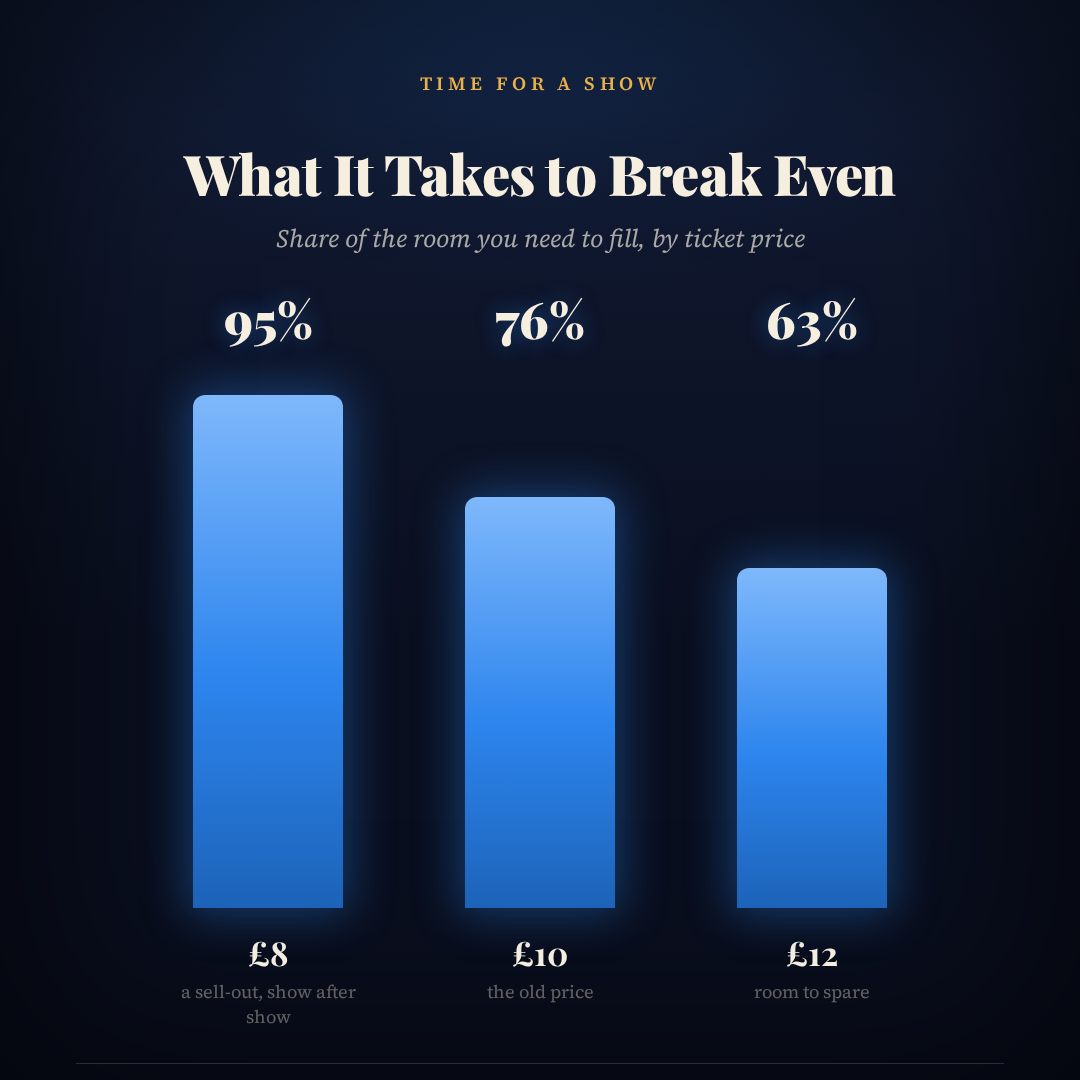
Where this really bites is break-even, the point where ticket revenue for the run exactly covers what the show costs to put on, hall hire, rights, costumes, printing, all of it, no profit and no loss. Say that comes to £3,800 for this run. At £8 a ticket, you need 475 sales to hit that, 95% of the 500-seat capacity, a sell-out in all but name, show after show. At the old £10 price, it's 380 tickets, 76% of capacity, exactly what the group sold last time. At £12, it drops to 317 tickets, just over 63% of capacity, comfortably under the rough industry-average audience size of around 66%. Only the higher price leaves room for an ordinary night. The other two need a good one, and the cheaper one needs a great one.
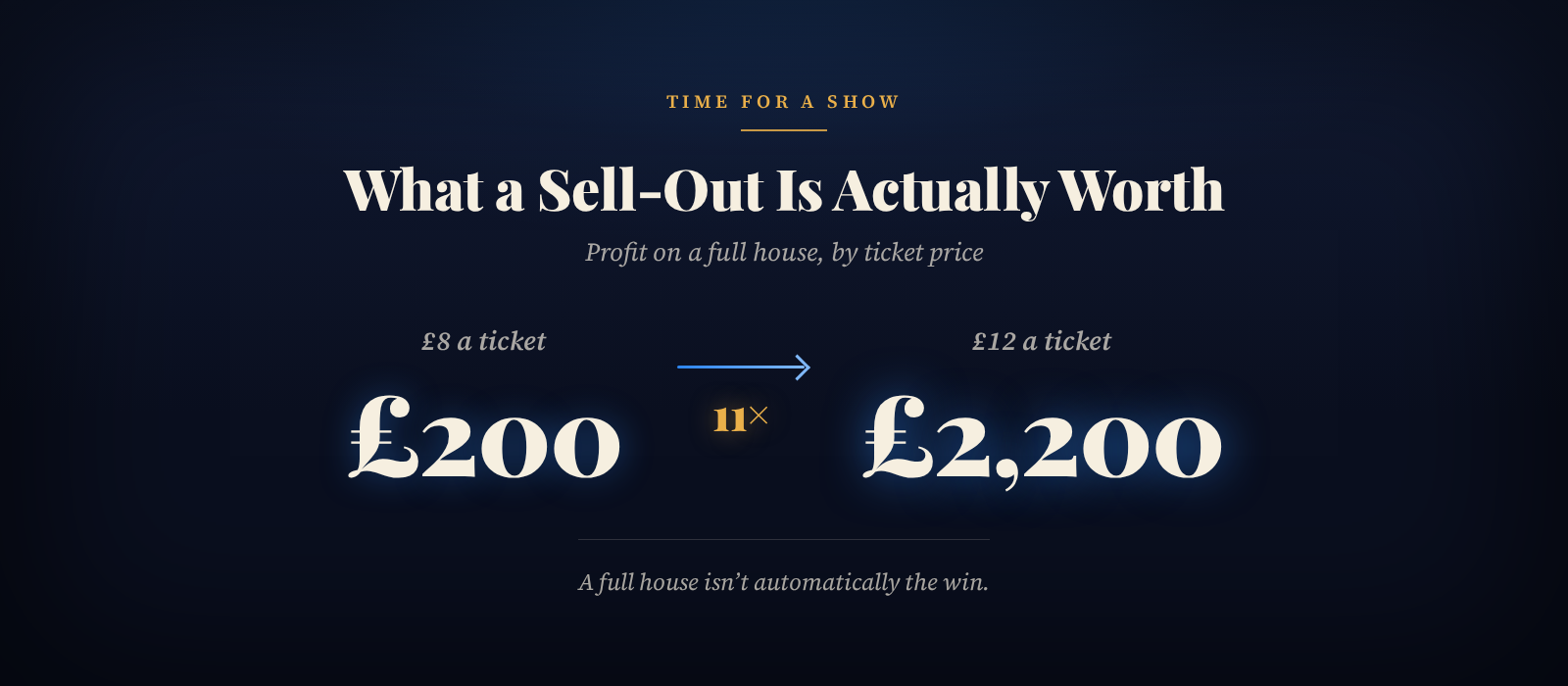
Now play out the best case. A full house at £8 clears £200, a margin thin enough that any unplanned cost wipes it out. That same £200 is achievable at £12 with the room only two-thirds full, and an actual sell-out at that price is worth eleven times as much, £2,200, the kind of buffer that raises what the next show can be for the audience: a bigger set, more fabulous costumes, one less corner cut.
None of this means a higher price is always right or a lower one is always wrong. It depends what the show needs to do, and what the rest of the local market is charging for something similar. But it's worth running the numbers before deciding, rather than assuming the cheaper price is automatically the safer one. A full house that only just covers its costs isn't actually the safe option. It's the one with no room for anything to go wrong.
This is not about profit. It's about the group still being here to put on the next show, and the one after that, the ones the audience actually turns up for. Whichever way the price moves, do it gradually. A small step gets noticed far less than a big jump.
Time For A Show won't make that call for you. But whatever price you land on, you're not locked into one flat number for the whole show. Price stalls and circle differently, add a concession rate, or run a discount code whenever it suits the show. It's all built in.