Group Discounts Fill the Room. They Don't Always Grow the Business.
A booking for forty is a lovely thing to see come in. Forty seats gone in one go. So when the person organising it asks whether there's a rate for a group, saying yes feels like the easiest decision of the whole run. Often it is. But a group discount does a very different job depending on which night it lands on, and only one of those jobs is the one you thought you were doing.
Say a group is running three performances in a 180-seat hall at £10 a ticket, and a coach party organiser asks for 40 seats at £8. Put them on the Thursday, the night that always lags, and that's 40 people who weren't coming otherwise. £320 the night would never have seen, and a fuller room for the cast to play to. Nobody loses.
Put the same 40 on the Saturday, the night that sells out regardless, and the sums look rather different. Those seats were going to go anyway, to people happy to pay £10. The coach party hasn't added a single person to the audience. It has swapped 40 full-price tickets for discounted ones, and the run takes £80 less for exactly the same full house. The people who would have bought those seats don't vanish either. Some will find another night. Some won't bother.
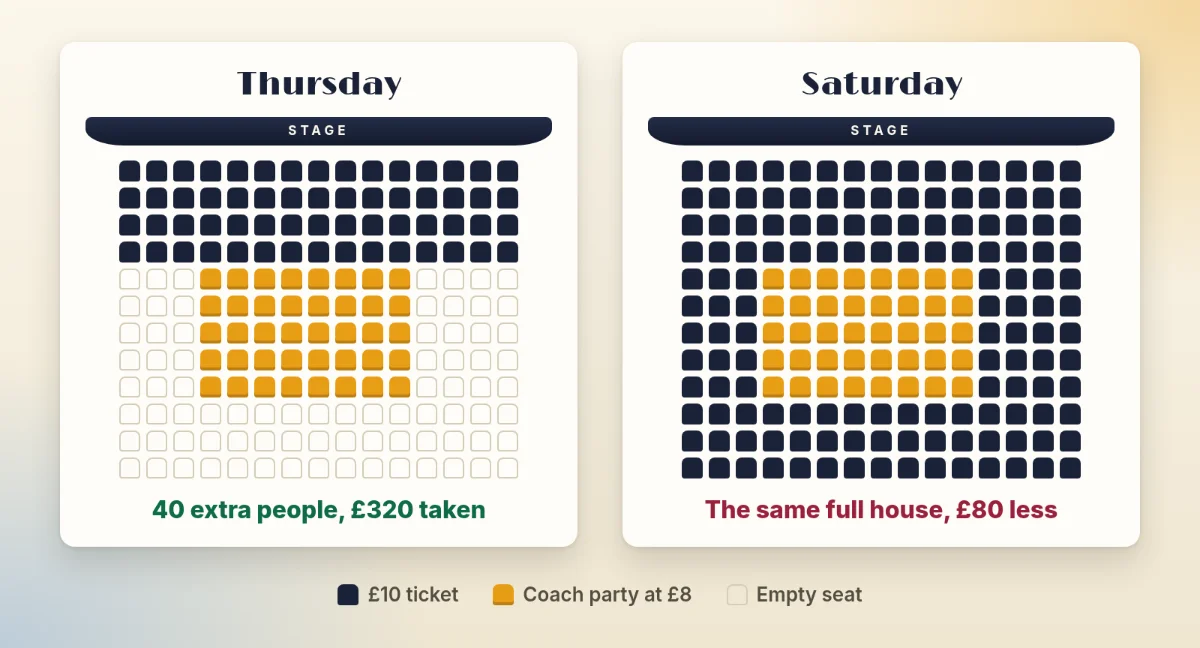
So before agreeing a rate, it's worth asking which night they're after, and whether they'd mind moving to the one that needs them.
Then there's the bigger question. Does any of this grow the audience? Growing it means more people choosing to come back next time, on their own, without being bussed in. And a coach party is really one booking. One person picked the show, one person paid, one email address went in. The other 39 never bought a ticket from you, so you've no way of telling them about the next show.
School trips are a bit different. A child who has a brilliant night at the theatre might drag a parent along to the next one, or turn up at auditions in a few years' time. Might. I honestly don't know how often that happens, and I suspect nobody does, because it's almost impossible to trace back to one night in a school hall years before.
None of which makes group bookings bad business. Forty seats sold in a single booking is still forty seats sold, and knowing one night already has a decent crowd is worth something.
The trouble only starts when the discount gets mistaken for audience growth. Filling seats on a night that needs it is genuinely useful. Giving away money on a night that didn't need it isn't. And if the aim really is a bigger audience next year, the discount won't get you there on its own. What might is making sure everyone in those seats leaves knowing who you are and when you're on next.
A full house is nice. A full house that comes back is better.
If you do agree a rate with a group, Time For A Show lets you set up a single-use discount code for their booking, so the price goes to the group you agreed it with and nobody else.