An Empty Seat Earns Nothing. A Discounted One Earns Something.
An empty seat on the night earns a show nothing. The cost of putting a show on doesn't move with the size of the audience, venue hire, rights, the printed programmes are the same total whether the room is a third full or packed, so a seat left empty really is money the group will never see, and filling it for less than face value beats not filling it at all. That's the whole case for discounting a ticket that would otherwise go unsold. It isn't the whole story.
Say a group puts on three performances in a 180-seat venue at £10 a ticket. By the start of that week, Friday and Saturday are close to full, 170 of 180 each. Thursday, same show, same price, is sitting at 60, a third full, a weeknight being a harder sell than a Saturday.
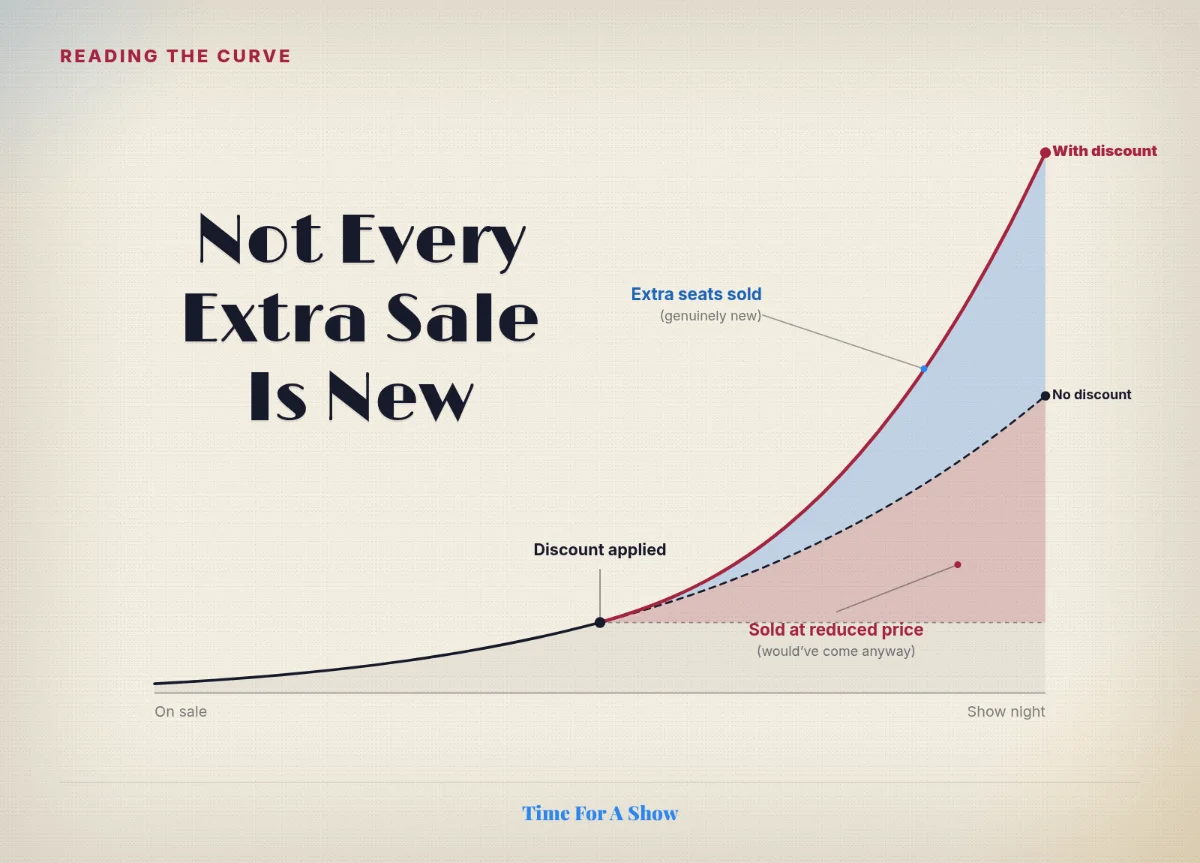
The group drops Thursday's remaining 120 seats to £6 and lets that stand for the rest of the week. Say 80 of those seats go on to sell. Not all of that is new custom, though, ticket sales tend to pick up in the final few days and on the night regardless, discount or not, so some of those 80 would have turned up anyway and paid the full £10. Say that's true for half of them, 40 people. The other 40 are the genuine win, people who wouldn't have come at all without the cheaper ticket.
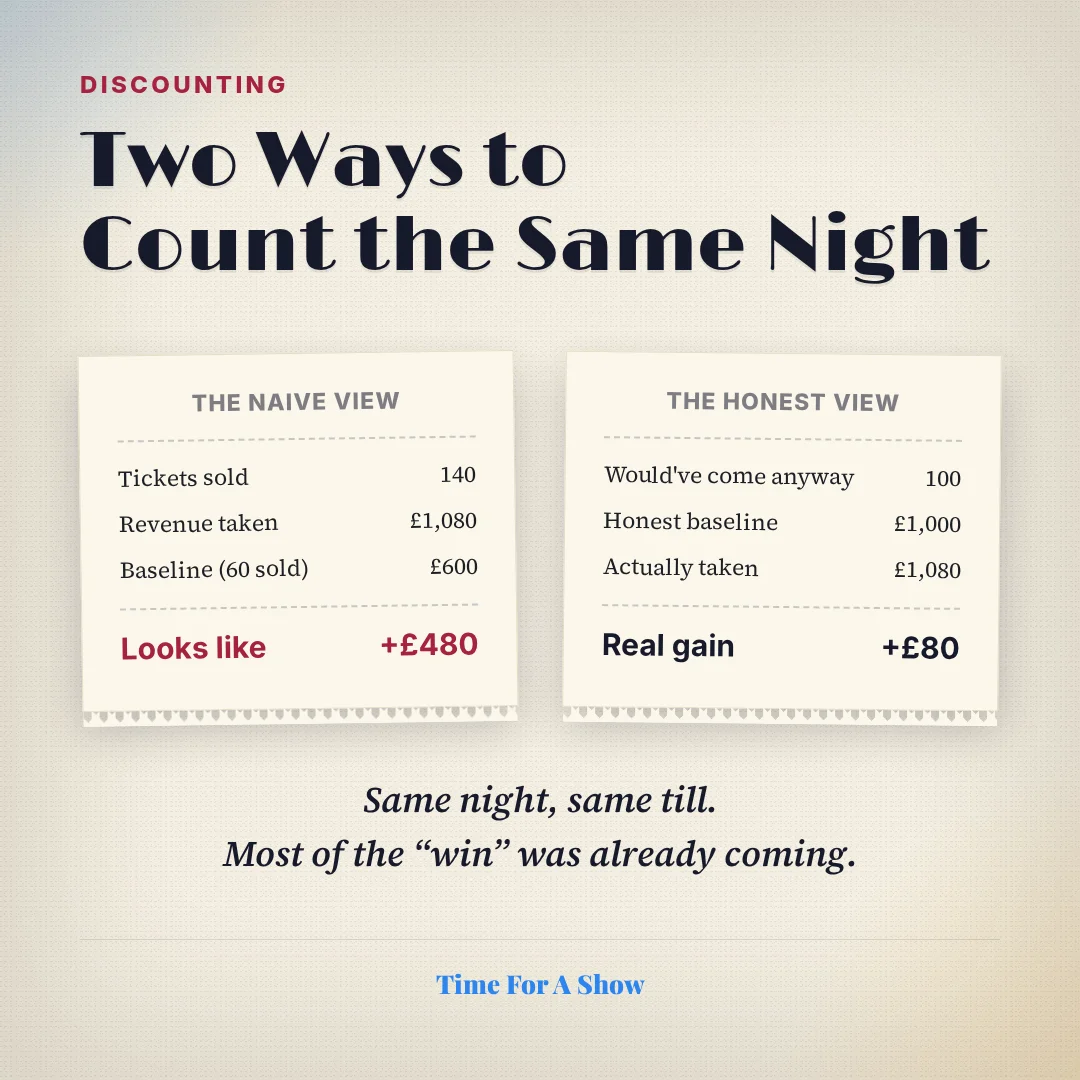
With the discount, Thursday takes £600 from the original 60 plus £480 from the 80 at £6, £1,080 from 140 people. The honest comparison isn't that £600 on its own, it's the 60 plus the 40 who'd have shown up regardless and paid full price: 100 people, £1,000. Discounting brought in £80 more and put 40 more people in seats that would otherwise have gone empty. Real, but a fraction of what the raw before-and-after totals suggest.
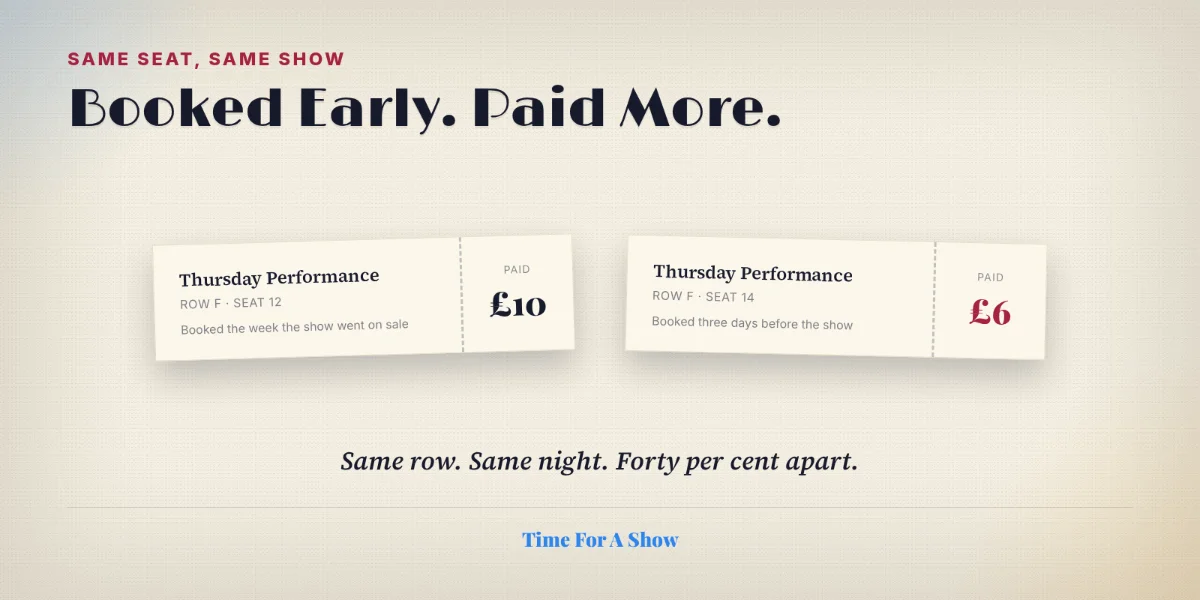
What that £80 doesn't show is the other side of it. The 60 people who booked Thursday early paid £10 for a seat now going for £6, two-fifths less. Nobody minds having paid a fair price at the time. They mind finding out someone next to them paid less for the same show, and the bigger that gap, the worse it sits with them. That cost never appears on a spreadsheet the way the £80 does. It walks into the building and sits in the audience for the whole performance, which is exactly the audience the group spent the night trying to win over.
There's a longer version of the same problem too. Do this every time a night lags and audiences learn the pattern. Early bookers start waiting instead of buying when a show's first announced, betting that a cheaper ticket will turn up nearer the night, because it always has before. At that point the discount isn't an occasional response to how one run happens to be selling, it's the price people are actually planning around, and the group is worse off on nights that were never lagging in the first place. This gets worse if you are basing your discounts off how well early sales are going. The lower early sales can drive the temptation to discount sooner and by more, validating what the bargain hunters were thinking.
None of that makes discounting the wrong move. It means treating whatever extra it brings in with some scepticism, and treating the size of the cut as a real decision rather than a lever to just pull harder. Work out roughly how much of any uplift is people who'd have paid full price anyway, because that part isn't doing anyone any favours. And keep the cut modest rather than steep, since a small saving feels sensible, while a deep one suggests the original price was never the real price.
Discounting is a genuinely useful tool, not something to avoid. It just has to be handled with some care, because getting it wrong doesn't show up in an obvious column on a spreadsheet, it shows up in the mood of the room on the night. Time For A Show won't make that call for you. But its pricing and discount tools are flexible enough to set up however you decide to use them.